Duskmourn cEDH Set Review 2024

Greetings, creatures of the night! Ready to dig into the latest and creepiest cEDH gems from Magic: The Gathering’s newest set—Duskmourn: House of Horror. We’ve just left the adorable critters of Bloomburrow behind, and now we’re stepping into what might be the eeriest set ever (sorry, Innistrad, you had a good run). From the nastiest demonic tutor yet, to a slick alternative to Abrade, a massive Boros balloon that’s sure to make waves, a juicy new combo piece for Stella Lee, and a battlefield-wrecking Necrotic Ooze, this set is packed. Oh, and for all my Yuriko fans out there, get ready—Wizards just dropped a shiny new staple. So, grab your lanterns and let’s hunt down some game-changing cEDH cards!

UNWANTED REMAKE
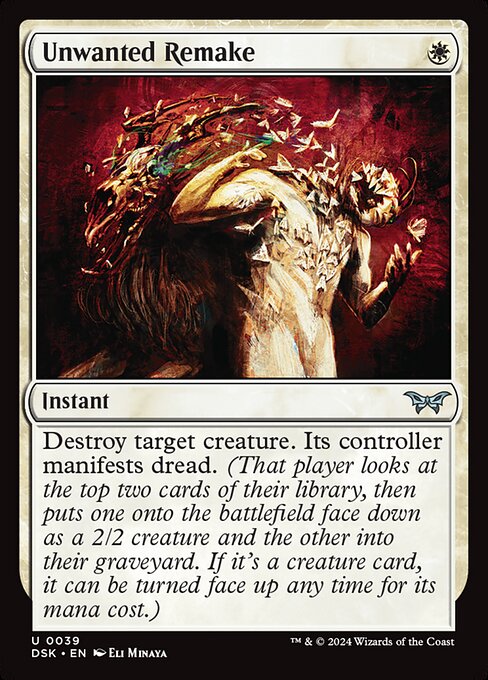
Unwanted Remake might just be the third-best white removal spell behind the classics Swords to Plowshares and Path to Exile. It’s cheap, instant-speed, and the drawback of giving your opponent a free creature is fairly minor, with the occasional bonus of messing up an opponent’s topdeck tutor.

It’s straightforward—good, old-fashioned manifesting, much like Reality Shift, a card that Unwanted Remake closely resembles.

That said, I predict Unwanted Remake will only see play in decks desperate for more removal after they’ve exhausted the usual go-tos. Unless, of course, a deck emerges that can abuse it in the same way Reality Shift used to be exploited: by looping it infinitely to mill out opponents, manifesting every card in their library.

COME BACK WRONG
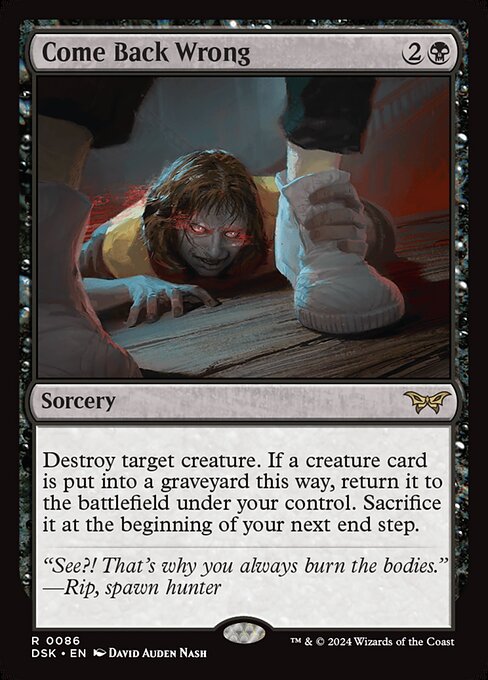
Come Back Wrong is a straightforward, versatile card—a mix of removal and clone. If you’re looking to take out a creature and get a shot at using its abilities, this might be worth considering. While you don’t keep the creature permanently, it’s great for stealing something like a Dockside Extortionist trigger, stopping your opponent from going infinite with bounce combos.

That being said, it’s a bit pricey at three mana and being limited to sorcery speed makes it feel clunky, so I doubt it’ll see much play in the mainstream cEDH scene.

BLUE

It’s a rare occasion to see a new set without any fresh cEDH tools for blue, usually the most stacked color. Yet, Duskmourn: House of Horrors has pulled it off. If I’ve missed something powerful in blue, I’d love to hear about it!

DEMONIC COUNSEL
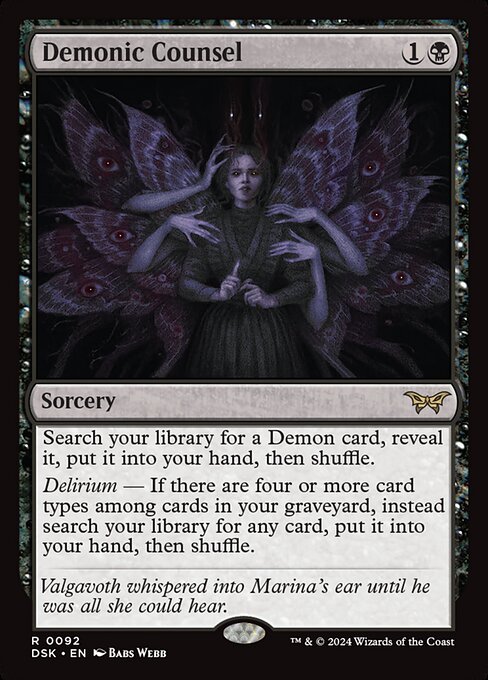
This is the ultimate Demonic Tutor—well, not because it’s strictly better, but because when it doesn’t function like Demonic Tutor, it still tutors for Demons. You ever say a word so many times it stops sounding real? That’s where I’m at with Demonic Counsel.

Now, in terms of Demons worth tutoring, there are really only two that stand out: Vilis, Broker of Blood and Razaketh, the Foulblooded. Unfortunately, neither sees as much play these days, but if you’re really in need of them on demand, Demonic Counsel isn’t a bad option.

For decks without Demons, though, you’re going to need a reliable way to trigger Delirium. Fetchlands help, as do self-mill and wheel effects, but don’t expect Demonic Counsel to be online early in the game—the turns that matter most in cEDH. Sure, other Delirium cards do see play, but look at Shifting Woodland—it’s still just a land without Delirium. And even Dragon’s Rage Channeler barely relies on its Delirium text. Because of this, I don’t see Demonic Counsel getting much play outside of specific niche builds, like Kaalia of the Vast. It could also find a place in Dargo, the Shipwrecker decks that want to tutor up Rakdos, the Muscle. But in most cases? It’ll likely stay on the sidelines.

DOOMSDAY EXCUCIATOR
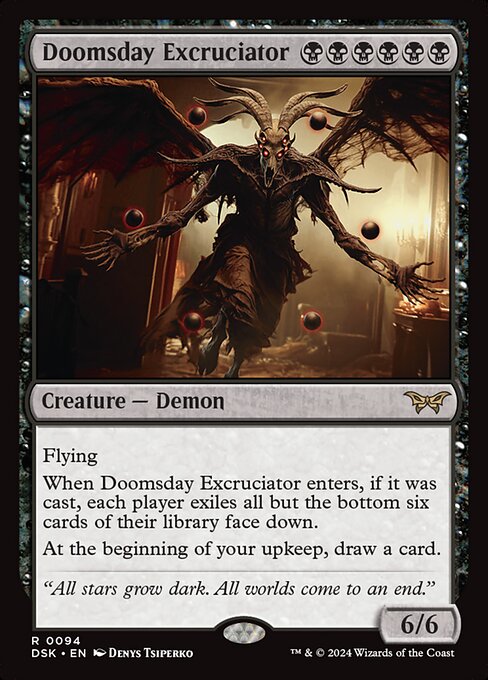
Six black pips on a single card? Perfectly fitting for a horror-themed set, and Doomsday Excruciator delivers with a unique, over-the-top effect and stunning artwork. Exiling all but the bottom six cards of all players’ libraries is a flashy and unprecedented move—but is it useful in cEDH? I’m not convinced.

If you’ve already got your win lined up and your opponents don’t, fantastic—you’ve effectively locked them out of the game, and you’re ready to take over. But here’s the thing: if you’re already in a position to win, wouldn’t you rather have something like Defense Grid, a counterspell, or any other form of protection instead? Your opponents may not be able to draw into their win conditions, but they can still interact with yours. Plus, Doomsday Excruciator leaves you with a ticking clock—you’ve got three turns before you deck yourself, thanks to the exile effect each turn.

All of this makes Doomsday Excruciator feel like a win-more card—something flashy but not impactful unless you’re already in a dominant position. While undeniably fun, it’s unlikely to find a home in most cEDH decks.

RAZORKIN NEEDLEHEAD
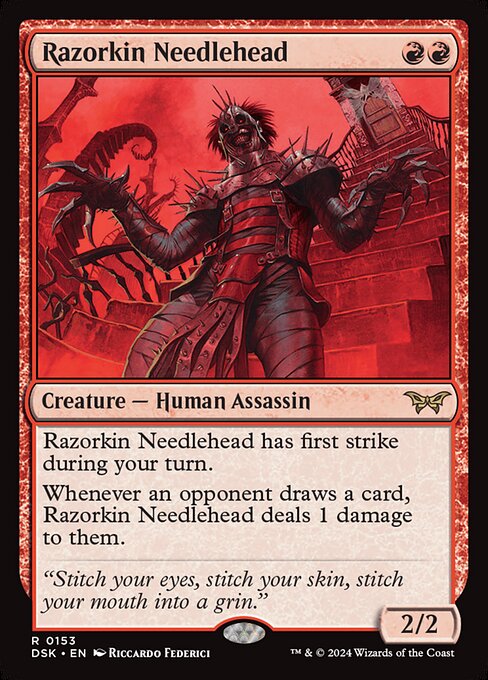
Razorkin Needlehead feels like what Orcish Bowmasters should’ve been—a strong deterrent to mass card draw that isn’t utterly busted or an auto-include in every deck. The problem? It’s so much weaker that I wish it had a bit more punch. It doesn’t need flash or an enter-the-battlefield trigger, but the ability to target creatures would’ve been a nice touch, especially for red decks that can handle two red pips.

As it is, Razorkin Needlehead probably won’t make the cut just to annoy the Rhystic Study player. It’s a bit too clunky for that. However, it does have a clear role in cEDH, particularly in Ob Nixilis, Captive Kingpin decks, where its synergy is more apparent. Otherwise, its lack of versatility will likely keep it on the sidelines.

UNTIMELY MALFUNCTION
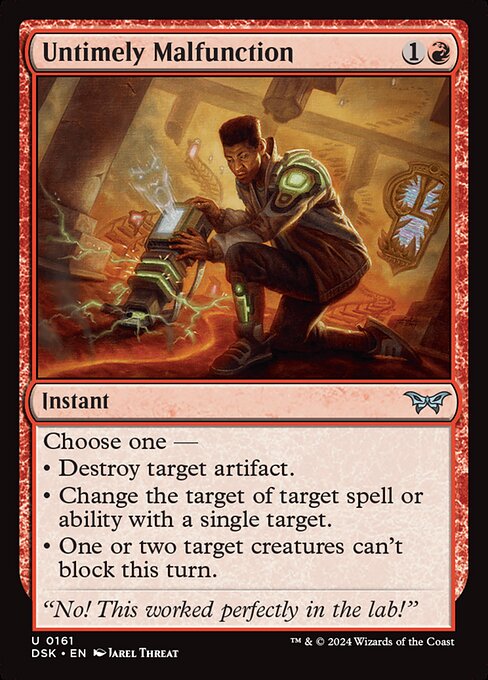
Untimely Malfunction serves as a sidegrade to the cEDH staple Abrade. If you’ve ever played a low-color red deck, you’re probably very familiar with Abrade—its flexibility to either remove a creature or destroy an artifact is always relevant. Most cEDH creatures have three toughness or less, and artifacts are abundant, so Abrade rarely misses. Untimely Malfunction, however, swaps out the artifact removal for the ability to either redirect a spell (in a Deflecting Swat style) or make two creatures unable to block.

While stopping blockers is situational—mainly useful for damage triggers or going for a lethal swing against a low-health player—the real value comes from its ability to redirect a spell. You can throw a Path to Exile or Swords to Plowshares back at its caster, protect a noncreature permanent from removal, or, perhaps most importantly, counter a counterspell by redirecting it to itself. This effect is already available in Deflecting Swat, which is free and therefore strictly better, but Untimely Malfunction is unique in offering this utility alongside creature removal.

Overall, I’d say Untimely Malfunction is slightly weaker than Abrade due to the loss of artifact removal, but if you’re in a low-color deck and need more flexible interaction that can remove a creature or protect one of your own, Untimely Malfunction could be a solid alternative.

VENGEFUL POSSESSION
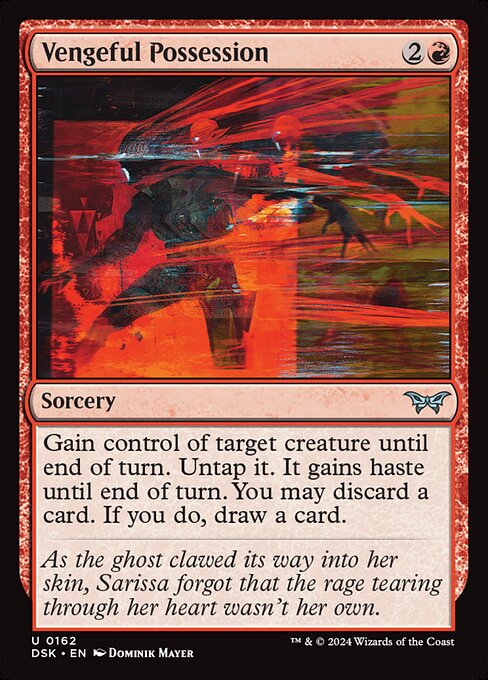
Threaten effects rarely make an impact in cEDH, usually reserved for draft decks—except for one key case: Stella Lee, Wild Card. For Stella, the value in taking control of a creature isn’t the point—you’re always targeting Stella herself. The real appeal of Vengeful Possession lies in the fact that it untaps the creature, enabling Stella’s primary combo of copying herself and untapping in an infinite loop. (For more on this combo, check out the link from our friends at Commander Spellbook.)

What makes Vengeful Possession particularly interesting is that it allows you to draw and discard with each iteration. While this is weaker than similar effects like Crimson Wisps or Cerulean Wisps—since it’s card-neutral rather than card-positive—it still enables you to dig through your deck, helping you find Twisted Fealty, which is the actual win condition. The discard also feeds into Underworld Breach lines, adding an extra layer of synergy.

If you’re curious about playing Stella Lee, Wild Card in cEDH, Josh LeBlanc from ElderDrunkenHighlander has put together a comprehensive writeup on the deck, which is worth checking out for deeper insights.

CONCLUSION

Duskmourn: House of Horrors ranks among the weaker sets I’ve reviewed for cEDH. While I’m excited about Kaito, Bane of Nightmares and expect The Master of Keys to be a hit with reanimation enthusiasts, and Marvin, Murderous Mimic certainly has endless combo potential, there’s just not a lot to sink your teeth into. From a cEDH standpoint, this set feels less like The Exorcist or The Thing and more like Winnie-the-Pooh: Blood and Honey—not great.

But as I always emphasize, that’s perfectly okay! Magic sets aren’t crafted specifically with cEDH in mind, and despite the growing popularity of our quirky little subformat, I believe they shouldn’t have to cater to it. Until next time…
What Are Tron Decks in MTG?

Magic: the Gathering has been in the gaming scene for so long that it’s practically seen more strategies than a chess grandmaster.

Imagine, there’s this ancient and famous move in the MTG playbook known as the Tron deck. But what’s the deal with this Tron thing in the world of magical cards?

Don’t worry, we’ve got you covered on all the nitty-gritty and more in this little guide of ours.

What is Tron Deck in MTG?

mtg, mtg tron decks, tron decks,

You know, over the many, many years (we’re talking almost three decades here), those who wield the MTG cards have come up with more plans than an overzealous squirrel storing nuts for winter. These strategies have become so famous that they’re like the rockstars of the deck world, touring in shuffling style all over the globe.

Alright, picture this: the Urzatron deck, also known as the “Tron” deck (no, it doesn’t involve transforming into a robot, sadly), is like that one dance move everyone copies at a party. It’s a strategy that’s been photocopied more times than office paperwork.

Sit tight, because we’re about to dish out all the juicy details about the name (spoiler: it’s not named after someone’s pet hamster), those fancy Urza’s lands it’s so fond of, and of course, the grand strategy that ties it all together.

Name

Alright, brace yourself for a twist in the naming game: the full-on official title of the deck is Urzatron, but folks in the know often give it a casual high-five and call it Tron. Just like how you’d rather be “chillin'” instead of “chillaxin’.”

Now, let’s rewind to the golden 80s, when perms and neon were all the rage. There was this cartoon superhero saga called Voltron, starring some righteous robots that could morph into one colossal metal hero. It was like Transformers’ wild cousin, only more synchronized dancing and less car-chasing.

And here comes the punchline: the name Urzatron? Yeah, it’s like a secret handshake to that retro robot show. It’s all about those three cards that are basically BFFs in the deck. They come together like a musical trio to create a magical mana-making contraption that’d make any magician proud. Just like those Voltron robots forming a super robo-friend, these cards form a super mana-generator. It’s like a backstage pass to the mystical mana concert!

Urza’s Land

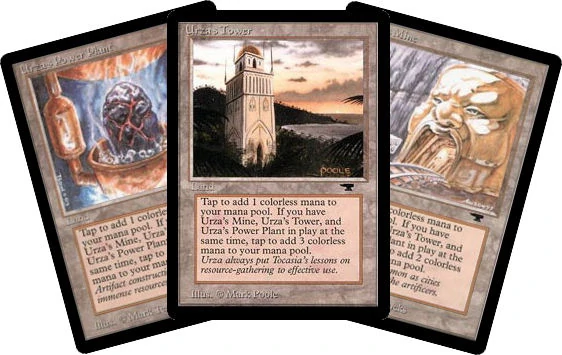
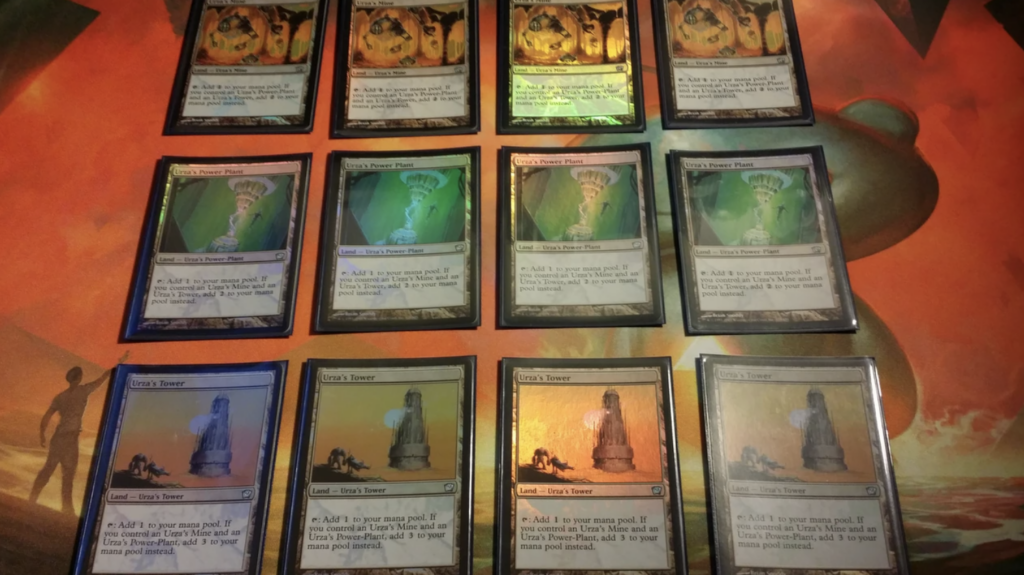
At the heart of every Urzatron deck are these three lands that are practically inseparable buddies: Urza’s Mine, Urza’s Tower, and Urza’s Power Plant. Think of them as the ultimate squad goals of the magical land world.

Here’s the lowdown: your mission, should you choose to accept it, is to ensure you’ve got at least one of each of these cards chilling in your deck. And hey, some party formats are all like, “The more, the merrier!” You might be able to pile up more than one of the same card in your deck, if the rules of the gathering allow it. So, imagine your deck’s like a cozy hangout spot for these lands.

Now, picture this: you’ve got your deck all decked out (pun intended) with these three special lands. Your main quest? Get them out on the game table faster than a kid running to the ice cream truck on a hot day. Why the rush? Well, these lands are like that trio in a boy band – they amplify each other’s magic mojo.

When you’ve got all three lands singing in harmony, the mana they produce goes from a polite “Excuse me, may I help you?” to an enthusiastic “Yo, let’s party!” We’re talking doubling up the mana magic. And why does this matter? Well, more mana translates to more spells being cast – it’s like being handed extra fries in a fast-food joint.

Imagine this scenario: by your third turn, you’ve got all three of these lands doing their thing like a synchronized swimming team at the Olympics. Your mana game could be so strong that your opponents might start checking if you’ve secretly hired a magician as your coach. That kind of advantage? It’s like having a pizza all to yourself while your buddies fight over the last slice.

Strategy

You know what’s cooler than choosing an ice cream flavor on a hot day? Building an Urzatron deck, that’s what! And let me tell you, there are more ways to build this thing than there are stars in the MTG sky. But the two most famous blueprints are the Red-Green “I’m feeling fiery” decks and the Blue-White “Serene but sneaky” ones.

So, in the epic tale of the Red-Green Tron deck, you’ve got cards like Sylvan Scrying, which are basically like those treasure maps that lead you straight to the good stuff. You play these cards, and they’re like your magical GPS to locate an Urza land if you don’t have one in your hand already. It’s like having a personal chauffeur for your lands.

These decks are all about speed – they sprint to get those three Urza cards on the table faster than a cheetah on roller skates. But beware, they’ve got a kryptonite: they can be as fragile as a house of cards in a windstorm when up against decks that specialize in land destruction. It’s like showing up with an ice cream cone to a melting contest.

Now, let’s switch gears to the Blue-White Tron decks, where they’re all like, “We’re going to find those Urza cards, and no one’s going to stop us!” They whip out cards like Gifts Ungiven – it’s like a treasure hunt where you get to pick your own prize. And as if that weren’t enough, they’re also experts in removal spells, which is like their way of saying, “Nope, you’re not invited to this magical party.”

Here’s where the fun really starts: once these Blue-White wizards hit the jackpot, they’re rolling in mana like a dragon in a treasure cave. And when the treasure chest is full, they unleash their most powerful spells, wiping out opponents like a toddler knocking down a tower of blocks. It’s like the grand finale of a fireworks show, but instead of sparkles, it’s raining spells.

See Also: What Does MTG Deckmaster Mean?

So, Should You Build an MTG Tron Deck?

Ah, the million-dollar (or should I say, Urza’s Tower) question: should you hop on the Tron deck train? Well, let me lay it out like a buffet of magical choices.

So, let’s talk turkey – those three Urza’s land cards? They won’t break your piggy bank. They’re not like that super fancy caviar of the MTG world, but they’re not exactly found in the bargain bin either. They’re somewhere in the reasonable realm, like treating yourself to a solid meal at a nice restaurant.

But, my friend, it’s not all about the coinage. It’s about your style. Do you dream of becoming the Usain Bolt of mana generation, sprinting into magical victories? If the thought of ramping up your land game sounds like a party you’d RSVP to, then this is your jam.

Here’s the catch: it’s like planning an epic road trip. You’re gonna need the right gear – in this case, a deck that’s like a well-oiled machine. Cards that make sure you’ve got your trio of lands in hand are your navigational tools. No “Oops, we missed the exit!” moments allowed. It’s like being in a scavenger hunt with the most important items hidden in plain sight.

In a nutshell, if you’re up for some deck-building tinkering and the idea of turbo-charging your mana thrills you more than a roller coaster, give it a whirl. Just remember, you’re gonna need a strategy that’s as tight as a jar of pickles that refuses to open. But trust me, that magical fireworks show when everything aligns? It’s like watching a unicorn race a rocket.

Conclusion

In the realm of Magic: The Gathering, Tron decks offer a tantalizing dance of mana through Urza’s lands. Whether you prefer the fiery speed of Red-Green or the calculated brilliance of Blue-White, the allure of commanding the field with spellbinding might is undeniably enchanting. Embrace the power, weave your strategy, and let the mana flow like a river of pure enchantment. Your battlefield awaits!

What Does MTG Deckmaster Mean?

Throughout the rollercoaster ride of its existence (imagine a theme park, but for wizards), Magic: the Gathering has gone through more makeovers than a chameleon at a fashion show.

Picture this: new cards strutting down the runway, rules doing the cha-cha slide, and strategies that evolve faster than a Pikachu learning new moves. It’s like the game took a crash course in “Change 101.” But hold on to your wizard hats, because amidst all this whirlwind, there’s one thing that’s been sipping its cup of chamomile tea, saying, “Change, who?”

Enter the MVP of card consistency: the design on the backs of Magic cards. Seriously, these backs have seen more battles than a knight in shining armor. But here’s the kicker: they’ve been rocking the “deckmaster” look for ages, and folks have been scratching their heads like they’re deciphering ancient hieroglyphs. I mean, why “deckmaster”? Did the cards secretly enroll in a prestigious master’s program or something?

Well, gather ’round, fellow spell-slingers, because we’re about to unwrap this mystery like a present on your birthday. In this enchanting tale, we’ll spill the beans on the “deckmaster” saga and sprinkle in a few extra magical morsels. So grab your popcorn – or should I say, enchanted popcorn – and let’s dive in.

See Also: What is MTG Arena?

What is MTG?

So, imagine this: Magic: the Gathering, a card game that’s been around since ’93, brought to you by the mystical minds at Wizards of the Coast – not a bunch of real wizards, mind you, but they’ve got some serious card-wielding skills.

Now, how in Merlin’s name do you play this thing? Gather ’round, my curious apprentices, and I shall bestow the knowledge upon thee.

Picture a battlefield (not the kind with tanks, but with cards). Here’s the lowdown: you and your buddies (or rivals, if you will) square off. Each of you has a stash of life points – think of it as your magical health bar. The grand prize? Lowering your foes’ life points to a pitiful 0. Yup, it’s a bit like a duel of insults, but with lightning bolts.

But wait, there’s more. Ever dreamt of being a spell-slinging sorcerer? Well, now’s your chance. You cast spells to shield yourself and smack down your opponents. But hold your wands, you can’t just toss these spells around like candy at a parade. You need mana, the magical juice that makes spells happen. And guess what? Mana comes in five colors: fiery red, pristine white, oceanic blue, pitch-black, and nature-loving green. These colors are like your wizardly power outlets, and the more mystical lands you have, the more mana you can channel.

Now, brace yourself, because casting big-time spells is like a shopping spree – the fancier the wand (spell), the more coins (mana) you need to drop. But don’t despair, oh aspiring wizards, for the spellbook holds nifty, budget-friendly spells too.

And here’s the kicker: sometimes, you can just whip out a “wincon” card. These sneaky little things are like secret paths to victory, cards with win conditions that, if you follow the recipe, grant you an instant win. Picture this: Approach of the Second Sun, a card that’s like saying, “Hey, win the game if you can cast me twice.” Simple, yet deviously brilliant. So there you have it, the arcane art of Magic: the Gathering – it’s all about cards, mana, and a sprinkle of wincon wizardry.

So, What Does MTG Deckmaster Mean?

You might be tempted to yawn when you first glimpse the backs of Magic cards, but hold on to your wizard hats, because there’s more to this design than meets the eye. You see, a bunch of creative folks locked themselves in a room (probably with some enchanted snacks) and conjured up the iconic look that graces the back of every single Magic: the Gathering card. And yes, that includes the mysterious “deckmaster” catchphrase.

Now, don’t let your eyes glaze over, because this is where the magic – pun intended – happens. Except for those fancy celebratory cards, every single card back in the realm looks identical. And guess what? That’s not just for kicks. Imagine this: if you could snoop and guess a card’s identity just by peeking at its back, you’d have a one-way ticket to Cheatersville. So, uniform card backs? Essential.

But what about those cryptic symbols and hues, you ask? Fear not, for I shall unravel the secrets of the card back hieroglyphs. Right up there, like a banner of wizardly pride, is the majestic blue Magic: the Gathering logo. Pretty straightforward, huh?

Now, beneath that logo, behold the five vibrant colored orbs – white, green, red, blue, and black – forming a chromatic rainbow. Think of these as the swatches on the wizardly color wheel that indicate the flavors of mana. It’s like magic’s own version of a paint palette.

And here’s where it gets mystical. Behind these colorful circles and logo, there’s a backdrop as dark as the night sky, with a lighter brown oval nestled within. Why, you ask? Well, it’s like an enchanted book, a magical tome where spells and stories are penned. So, when your deck is spread out like a stack of spellbooks, the aesthetic is just enchanting.

So, there you have it – the artful masterpiece that is the back of your trusty Magic cards. It’s more than a design, it’s a journey through a wizard’s imagination.

Conclusion

And there you have it, fellow planeswalkers and aspiring spellcasters! The enigmatic tale of the “deckmaster” design on the backs of Magic: the Gathering cards has been revealed, like a magical curtain lifted to unveil the secrets of a grand stage.

From the unassuming surface, it turns out that this seemingly mundane design is a fortress guarding the integrity of the game. The identical backs, adorned with the illustrious blue logo and the vivid orbs of mana, stand as a shield against the devious art of cheating, ensuring that every duel is a fair, spellbinding showdown.

And the subtle touch of a book-like backdrop? It’s a testament to the creators’ dedication to crafting a universe where players aren’t just card players – they’re wizards weaving tales and spells in a world of infinite possibilities.

So, as you gather around the table for your next duel, take a moment to appreciate the thought and artistry that’s been tucked into every single card, right down to its back. It’s a nod to the past, a touch of mystery, and a spark of magic that binds players together in a shared adventure through the realms of imagination.

What is MTG Arena?

You can’t deny it, Magic: the Gathering is basically the rockstar of games.

I mean, it’s been around for like, almost three decades, and during all that time, it’s managed to hook millions of folks – and guess what, they’re still hooked! We’ve even got this fancy article yapping about why everyone’s head over heels for it.

Now, in this era of everything being online, it was only a matter of time before MTG thought, “Hey, let’s join the online party too!” And voila, we got MTG Arena strutting its stuff.

So, if you’re one of those sorcery-loving peeps, you might be scratching your head and thinking, “Should I dive into MTG Arena? Is it like, the real deal or just a bunch of virtual hocus-pocus?”

Well, let’s find out together!

So, What Exactly is MTG Arena?

You know, in this age of everything going digital, it’s like virtual versions of stuff just sprout out of thin air.

So, brace yourself, because even the mighty Magic: the Gathering decided to jump into the online party. Yep, you guessed it, MTG Arena is like the online avatar of the OG Magic.

Now, before you go thinking this is just some retro game revamped for the modern era, let me drop a truth bomb: MTG Arena is a fresh face on the block. It’s like the new kid who’s all about that online card game trend that’s been sweeping the digital landscape.

And hey, if you’ve ever heard of this little thing called Hearthstone by Blizzard, you’re in the loop. But trust me, there’s a whole bunch of other digital card games out there strutting their virtual cardstock too.

Why You Should Play MTG Arena

MTG Arena didn’t magically conjure up a player base out of thin air. I mean, there’s gotta be some legit reasons for people to gather ’round their virtual card tables, right?

So, let’s put on our magnifying monocles and inspect this situation closely. Turns out, there’s a whole treasure chest of reasons folks are falling head over heels for MTG Arena. Brace yourself, ’cause here’s the scoop:

  1. Automated Rules and Whatchamacallits: No need to be the human rulebook, the game’s got your back.
  2. Global Game Night from Your Couch: You can play with card wizards from every nook and cranny of the globe, all while rockin’ your pajamas.
  3. Cards Without the Clutter: Your card collection goes virtual, no need to call the clutter police on your room.
  4. No Repetitive Shopping Sprees: You don’t have to buy a gazillion copies of your fave cards. Phew, your wallet thanks you.
  5. Sleeveless and Stress-Free: Forget card sleeves or deck boxes, your cards are living the minimalist dream.
  6. Cards on the House: Win free virtual cards while dueling against other armchair strategists. Who doesn’t love freebies?
  7. Express Yourself, Avatar-Style: Your in-game self can be a dancing banana if you want. Okay, maybe not that, but close enough.
  8. Cards with Pizzazz: Cool animations that make your digital deck feel like a full-blown fireworks show.
  9. MTG Arena Showdowns: Competitive battles that’ll have you sweatin’ virtual bullets.

See? MTG Arena’s not just another virtual mirage – it’s got more perks than a happy hour at a wizard’s tavern.

Play With Players Around The World

Picture this: you’re in your cozy sanctuary, ready to dive into some serious hobby action.

Enter MTG Arena, your ticket to thrilling Magic matches without even moving a toe outside. No need to battle through traffic or herd your pals together like reluctant sheep.

And here’s the kicker: MTG Arena’s like your hero in shining virtual armor if you’re stuck in a place where finding fellow Magic wizards is like finding a needle in a magical haystack. No more sitting in the corner with your dusty cards, ’cause online play’s got your back.

No Need To Save Up Space For Your Cards

Remember those ginormous Magic collections that practically demand their own postcode? Yeah, they can hog more space than a dragon’s treasure horde.

Between stacks of cards, chunky decks dressed in snazzy sleeves, and the fortress of boxes you stash ’em in, it’s like playing a game of Tetris in real life. And let’s not even talk about the brainpower it takes to strategize storage solutions. Some folks end up with card-filled boxes that wouldn’t look out of place in a game of card-themed Jenga.

But hold your cardboard horses, ’cause MTG Arena’s like a magician’s trick: all that space drama disappears like a rabbit in a hat. Why? ‘Cause your virtual card collection lives in the magical realm of cyberspace, where the only space it takes is on your computer screen. No more real estate woes, my friend.

You Can Earn Packs Instead of Buying Them

Let’s face it, being a Magic maestro can cost a pretty penny. And no, I’m not just talking about those fancy sleeves and deck boxes that could probably fit a small car.

The cards themselves are the real wallet warriors in Magic: the Gathering. And with new sets popping up more often than funny cat videos, your piggy bank might start sobbing.

MTG Arena, though, is like the financial wizard of the gaming world. It does a victory dance over those wallet woes because it’s all about that free-to-play groove. No money down for downloading, playing, or even card-shopping. It’s like the thrift store of the Magic realm.

Ever heard the phrase “earn your keep”? Well, in MTG Arena, you earn your cards. Tackle quests, go head-to-head with fellow wizards, and bam, free card packs are raining like confetti at a magic-themed parade.

But wait, there’s more! If time’s not your magical currency, you’ve got the golden ticket to buy card packs directly. Convenience at its finest.

So, whether you’re raking in virtual riches or indulging in some express card shopping, MTG Arena’s got the price puzzle solved.

Customized Profiles

In the grand world of the interwebs, everyone’s flexing their unique vibes. And guess what? MTG Arena’s waving its digital wand to give you that same swanky chance.

Just like those profile pics that scream, “This is me!” on social media, MTG Arena lets you rock your style. They’ve got avatars like a virtual dress-up closet and deck sleeves that turn your cards into fashion statements. It’s like a makeover for your virtual self and your card crew.

Now, here’s the trick – these cool tweaks won’t exactly turn your deck into a mythical beast-slaying powerhouse. But they’re like the sprinkles on a sundae, adding that extra flair to your game. It’s like wearing your lucky socks on game night – not game-changing, but it’s all part of the fun.

MTG Arena Competitions

Guess what? Just like the OG MTG, MTG Arena’s got its own version of showdowns and shindigs.

It’s like a big ol’ gathering where you and fellow card wizards strut your stuff. Yep, it’s not just about the cards – it’s about building a community, too. And trust me, nothing gets the excitement bubbling like a friendly duel for the title of digital spell-slinger supreme.

Picture this: you’re in the arena, virtual crowd cheering (in your imagination, of course), and it’s time to unleash your card-commanding mastery. Suddenly, it’s not just about the game – it’s about the thrill of competition. It’s like a hot sauce challenge for your gaming senses – it stings a bit, but it sure makes you want to level up your wizardry.

MTG Arena Disadvantages

Ah, the age-old truth: everything’s got its ups and downs, and MTG Arena is no exception.

Lucky for us, the downsides aren’t as feisty as the ups. Still, if you’re the kind who treats physical cards like family heirlooms, these not-so-fun bits might dim the sparkle.

Now, let’s unveil the not-so-magical aspects of MTG Arena:

  1. Mobile: Sorry, mobile lovers, the MTG Arena app is still missing in action. Your cards are staying put on your desktop for now.
  2. Format Frustration: Formats are like fashion trends, and MTG Arena’s closet isn’t endless. Some formats are MIA, so your dream deck might have to chill backstage.
  3. Set Selectivity: Not all card sets are in the game’s star-studded lineup. So, if you’ve got a fave set, it might be MIA on the digital stage.

See, MTG Arena’s like a magical ride – enchanting, but there’s the occasional hiccup. But hey, it’s all part of the enchantment, right?

So, Is MTG Arena Worth Your Time?

So, here’s the million-gold-piece question: Is MTG Arena your digital destiny or just a side quest?

Sure, some folks might eyeball those drawbacks and raise a skeptical eyebrow. But guess what? The final verdict is all yours, my friend.

Got a soft spot for the classics or a crush on Commander? MTG Arena might not be your ticket to card stardom. But hold on, if you’re the type who’s all about the freshest card breeze, lacks space for a physical card mountain, or simply prefers battling dragons in your PJs, then girl (or guy), you’ve got a date with MTG Arena.

And listen up, newbie – even if you’re as green as a forest card, there’s no “magic age” to jump in. It’s like trying that exotic dish at a food festival – costs nothing but a bit of your time.

So, ponder the pros and cons, gather your virtual robes, and give MTG Arena a whirl. Who knows, you might just cast the spell of digital card infatuation.

Conclusion

In the grand tapestry of card games, MTG Arena emerges as a digital enigma, weaving together convenience, community, and strategy. Like any spellbook, it has its pages of benefits and blips. While devoted card collectors might hesitate in the face of its virtual allure, the choice ultimately rests with each player’s style and preferences.

Whether you’re a card connoisseur or a rookie raring to dive in, MTG Arena’s digital realm welcomes all. The scales tip in favor of the new age, where swiping cards on a screen feels as natural as shuffling them in hand. So, whether you’re ready to embark on a card duel from the comfort of your haven or itching to explore a world of animated avatars, MTG Arena beckons with its digital charm.

Understanding the Concept of MTG Cube

So you’re knee-deep in Magic: The Gathering, weaving spells and summoning creatures like it’s your job. But let’s face it, even the most thrilling duels can eventually turn as bland as yesterday’s oatmeal. Suddenly, you’re stuck in a Groundhog Day loop predicting every move your opponents make. And poof, there goes the whole “randomness” thing the game’s built on. Bummer, right? Well, wipe that tear away, because guess what? There’s a hero to save the day!

Enter the stage with jazz hands: the MTG cube format! It’s like giving your card battles a fresh coat of paint. Imagine this: you and your buddies gather a whopping 360 cards, enough to make a librarian green with envy. And the best part? It’s not a solo gig anymore. You can round up to 8 eager players. Now, 8 might sound like trying to fit a circus troupe in a Mini Cooper, but fear not! The mystical interwebs have your back. You can cube it up online, transcending space and time zones like a digital sorcerer.

So there you have it, the ultimate solution to turning your Magic nights into a rotating carnival of spells and surprises. Gather your cards, call up your pals, or just wrangle some virtual wizards, and dive into the cube-licious world of MTG cube gaming.

What is MTG Cube?

Alrighty, let’s dive into the world of MTG cube like we’re spelunking for treasure in a card-filled cave. Brace yourselves, because this format is like a magical flea market on steroids. You can pile up between 360 and 720 cards, which is like inviting a whole horde of cards to a rager. And the basic setup of 360 cards is like throwing together 24 boosters of 15 cards each. Gather around 8 pals, and boom, you’ve got a card party.

Now, here’s the kicker: you can’t have a clone club in your cube. Each card needs to be a one-of-a-kind superstar. It’s like a high-stakes game of “Guess Who?” where every card is a character with its own quirks.

With this card buffet, the game gets wilder than a roller coaster in a hurricane. You never know what’s gonna pop up next, and that’s the magic of it.

Building a Cube is like playing matchmaker for your favorite cards that don’t quite fit into the regular deck dating scene. Each MTG Cube is like a fingerprint, unique to its creator. It’s a way to show off your personality – it’s like dressing up your cards for a glamorous ball. You can go all out with fancy foil versions or flaunt promo cards like they’re red carpet VIPs. Heck, you can even sneak in cards autographed by their artists – talk about a collector’s flex.

Read Also: How To Maximize Your EDH Deck Strength

How to Create an MTG Cube

So, you’re about to embark on a journey into the mystical world of crafting and maintaining a Cube in Magic: The Gathering. Buckle up, because here’s the lowdown in a few easy-peasy steps:

Step 1: Get Your Theme and Size Sorted

First things first, decide how big you want your Cube to be. It’s like picking the size of your canvas for an epic painting. Then, channel your inner wizard and figure out what kind of cards and strategies you’re vibing with. Are you all about summoning creatures left and right, flinging spells like a spell-flinging pro, or just chilling in the lands department? This is your card kingdom, after all!

Step 2: Round Up Your Cards

Time to rustle up those cards, partner! You can snag ’em in all sorts of ways – buying, trading, or unleashing cards from your own collection like a magician revealing their deck of secrets. Just remember, variety is the spice of Cube life. Make sure you’ve got creatures, spells, lands, and all that jazz for a well-balanced card stew.

Step 3: Card Categorization Fiesta

Next up, it’s like sorting your sock drawer, but way more magical. Organize your cards into categories or themes, making it easier to play mix-and-match later on. And hey, why not make a fancy list of your cards? You know, with their names, colors, and all the deets. It’s like giving your Cube a virtual name tag.

Step 4: Cube Construction Time

Now comes the fun part – deciding which cards make the cut. Think of it as crafting a fantasy sports team, but with cards. Use tools like card databases and Cube lists to pick and choose your card champions. Balance is key, like a perfectly made sandwich. And if you’re feeling a particular vibe or strategy, give it a high-five in your Cube.

Step 5: Game On, Cube Style

Congratulations, you’ve built your Cube masterpiece! Time to give it a whirl and see how it performs. Play some games with your friends, your imaginary friends, or even your pet rock – whatever floats your card boat. If things are flowing smoothly, you’re golden. If not, no worries! Tweak and adjust like a master chef refining their recipe.

Step 6: Keepin’ it Fresh

Like a houseplant or a favorite pair of jeans, your Cube needs some love and attention over time. Stay in the loop about new card releases and any rule changes that could throw a curveball into your Cube universe. And if you’re itching for a change, switch things up based on your own card cravings or your pals’ thoughts. Give your Cube a spa day every now and then – it deserves it.

There you have it, your Cube saga from start to finish. Now go forth and create a card collection that’s more enchanting than a unicorn riding a rainbow!

Reasons Why You Should Play in a Cube Draft

So, you might be sitting there, pondering whether diving into the whole cube-building adventure is your kind of jam.

Here’s the scoop – it’s like asking if pineapple belongs on pizza; opinions vary, my friend. But let’s say you rounded up a bunch of players, put a spotlight on them, and asked, “Is cube-drafting worth the hype?” Odds are, you’d get a chorus of “Oh heck yeah!”

Imagine this: you’re in a card duel with your pals, and that one friend – let’s call them the “Constant Victor” – seems to have a hotline to card luck. A cube could be your magical solution, a potion to stir things up and give everyone a fighting chance. It’s like serving a curveball to a cricket team that’s used to home runs.

And oh boy, the themes you can rustle up in a cube! Picture this: a cube themed like a disco party, complete with glittery cards and spell beats that’ll make you want to boogie. Or maybe you go old-school with a Power Nine cube, where the cards are like the superhero legends of Magic: The Gathering, cape and all.

Let’s talk socializing, shall we? Cubes are the ultimate party trick for game nights. It’s like throwing a card carnival where up to eight players can dive into the chaos. And remember, in the world of cubes, randomness is the guest of honor and wild Magic combos are the party favors.

Feeling fancy and ready to splurge on a card-shopping spree? Grab a whole booster box and shower yourself with a confetti of new cards. Just be sure to catch those falling cards – paper cuts are not part of the package deal.

So there you have it, my fellow adventurer into the cube realm. Is it worth it? Heck yeah, but remember, it’s your journey, your deck, and your magical kingdom to rule.

Conclusion

In a world where every card flip and every strategy is a ticket to a new adventure, the MTG Cube shines as a beacon of creativity, camaraderie, and boundless fun. Crafting your very own cube is like being a mad scientist in a lab of cards, concocting a unique universe of gameplay that aligns perfectly with your preferences and style. With the power to turn the tables on predictable victories and introduce exhilarating surprises, a cube breathes fresh life into Magic: The Gathering gatherings.

The Mystery of Permanents in Magic: The Gathering

Ahoy there, fellow planeswalkers and spell-slingers! Gather ’round as we embark on a mystical journey through the enchanting realms of Magic: The Gathering. Today, our focus shall illuminate the enigmatic world of “Permanents” – those sneaky, steadfast cards that stick around like your favorite sidekick.

Picture this: you’re a master conjurer, a sorcery slinger, and you’re holding your deck close to your heart. Your fingers dance over the cards like a maestro composing an arcane symphony. And what’s this? A permanent card winks at you from your hand. But what is it? Why, it’s a card that’s here to stay, like that friend who always overstays their welcome but in a good way!

So, what in the multiverse are Permanents, you ask? Buckle up, because we’re diving into the rabbit hole!

The Defining Essence of Permanents

In the mystical realm of Magic: The Gathering, Permanents are cards that take the concept of “here to stay” to a whole new plane. These are the trusty companions that stick around like that one stubborn mosquito at your summer campfire. They’re like the furniture of your deck – steadfast, unwavering, and integral to the tapestry of your game.

See Also: Beginners Guide To Power Levels in EDH

Types of Permanents: A Mixed Bag of Magic

Now, here’s where things get spicy! Permanents come in various flavors, each with its own unique charm. Let’s lift the curtain and unveil the grand gallery of these mystic marvels:

1. Creatures

These are the creatures of myth and lore, brought to life on your card table. From the fearsome dragons that can scorch your opponent’s plans to the nimble faeries that can evade even the craftiest of traps, creatures are the heart and soul of your battlefield strategy.

2. Artifacts

Ever wished you could hold the power of a relic from ancient times? Artifacts are your ticket to that dream. These nifty gadgets can range from an enchanting amulet that boosts your spells to a towering contraption that can change the tide of battle.

3. Enchantments

Ah, the sweet melodies of enchantments! These cards are like the whispers of unseen spirits, bestowing your game with unique abilities and a touch of the fantastical. Whether it’s a land that blossoms with otherworldly magic or a curse that plagues your foes, enchantments are the spice of life in the world of Magic.

4. Lands

Now, don’t be fooled – lands might seem like mere bits of cardboard, but they hold the very essence of the planes you traverse. They’re the bedrock of your strategy, the foundation upon which your spells are woven. From the serene plains to the untamed forests, lands are the tapestry of your battlefield.

5. Planeswalkers

Ever wanted to pal around with Jace or Chandra? Planeswalkers are the VIPs of your deck – powerful beings who’ve seen more planes than your luggage at an interplanar airport. These walking legends add a dash of personal flair to your game, casting spells, summoning creatures, and even messing with the minds of your opponents.

The Dance of Permanents: Unveiling the Symphony

Now that we’ve unveiled the colorful cast of Permanents, let’s talk about their dance on the battlefield. When you cast a permanent card, it waltzes onto the battlefield, ready to rock and roll. Creatures stand tall, ready to clash in an epic showdown, while enchantments lend their enchanting aura to the scene. Artifacts hum with latent power, and lands… well, they just do their thing, patiently waiting for you to tap into their magic.

But, dear planeswalker, remember this: every dance has its rhythm, and Permanents have their own tempo. You’ll need to tap your lands just right to summon these magical companions, and once they’re out, they’re here to stay – until some cunning spell or a strategically-placed axe sends them packing.

Conclusion

So, there you have it, a glimpse into the vibrant realm of Permanents in Magic: The Gathering. These cards are more than just cardboard cutouts; they’re the threads that weave your strategy, the companions that stand by your side, and the heartbeats of your deck.

Next time you lay out your cards and take on the role of a planeswalker, remember the Permanents that stay. Creatures, artifacts, enchantments, lands, and planeswalkers – they’re the symphony that turns a simple game into a magical journey through the multiverse. So shuffle your deck, draw your cards, and may your Permanents always be in your favor!

The Art of Building Competitive EDH Decks

Hey there, fellow spell-slingers and strategy enthusiasts! Welcome to the heart-pounding arena of Competitive EDH, where sparks fly, spells sizzle, and victory tastes sweeter than a sip of the finest mana potion. If you’re ready to dive headfirst into the high-stakes world of cutthroat Commander action, then grab your decklist and fasten your seatbelts, because we’re about to embark on a wild ride through the cosmos of building Competitive EDH decks!

The Quest for the Perfect Commander: The Legendary Search

Picture this: you’re a daring Planeswalker on the hunt for the ultimate commander to lead your charge. This isn’t a casual stroll through the multiverse; it’s a high-speed chase after the crown jewel of your deck. In the realm of Competitive EDH, your commander isn’t just your guiding star – it’s the sun around which your entire strategy orbits.

Choose your commander wisely, my friend. Seek out the ones with game-breaking abilities that’ll make your opponents quiver in their boots. Maybe it’s a legendary creature that lets you cast spells for free or one that generates infinite mana faster than a rabbit out of a hat. This isn’t the time for warm fuzzies; this is the time for raw power, the kind that turns heads and topples thrones.

Your commander isn’t just a figurehead; it’s a linchpin that holds your deck together. It’s your lead actor on the grand stage of the battlefield, and the supporting cast must complement their strengths and cover their weaknesses. Your deck’s synergy with your commander is like a duet between a master musician and their instrument. As you gather your supporting cast of creatures, spells, and enchantments, make sure they amplify your commander’s strengths and shore up their vulnerabilities. It’s like a group of adventurers banding together to conquer a dungeon – each member bringing a unique skill to the table.

Read Also: How To Maximize Your EDH Deck Strength

The Arsenal of Annihilation: Weapons of Choice

In the wild world of Competitive EDH, your deck is a lethal arsenal, and each card is a weapon honed for maximum destruction. This isn’t your grandma’s kitchen – it’s a battleground of spells, where every choice matters more than a dragon’s hoard.

Synergy is your secret sauce, my friend. Mix and match your spells and creatures to create devastating combos that’ll make your opponents’ jaws drop. Whether it’s infinite combos, lockout strategies, or explosive board wipes, your deck should be a Pandora’s box of tactics waiting to be unleashed.

Remember, you’re not just playing a game; you’re crafting an experience for both you and your opponents. The moment you reveal a game-changing combo, the room fills with a sense of awe and anticipation. It’s the kind of thrill that leaves your opponents marveling at your brilliance and strategizing on the fly.

Mastering Mana: Fueling the Fire

Mana isn’t just magical currency; it’s the lifeblood of your deck. In the realm of Competitive EDH, your mana base is like a well-oiled engine – and trust me, you want that engine purring like a content cat.

Lands, mana rocks, dorks – they’re your loyal minions, toiling away in the background to feed you the mana you crave. Your deck is as thirsty as a desert wanderer, and mana is your oasis. So, don’t skimp on ramp; you want to hit the ground running faster than a goblin with its tail on fire.

But mana isn’t just about quantity; it’s about diversity. Just as a chef uses a variety of ingredients to create a delectable dish, you need a diverse mana base to cast a wide range of spells. Multicolored commanders require a rainbow of mana sources, while colorless commanders demand a careful balance between basic lands and colorless producers.

Recommended: Top 5 Best Cards in MTG Commander

Interaction Euphoria: Countering, Crushing, Conquering

Competitive EDH isn’t a polite tea party; it’s a brawl where the strongest survive and the smartest thrive. Interaction is your ticket to the VIP section of victory, where you get to call the shots and throw a wrench in your opponents’ game plans.

Counter spells, removal, and disruption are your trusty sidekicks. They’re like the wind beneath your wings, propelling you to greatness while grounding your foes. So, pack your deck with ways to say “no” to your opponents’ shenanigans, whether it’s countering their game-winning spell or exiling their pesky artifacts.

But here’s the secret ingredient: timing. Just as a master illusionist dazzles the crowd with perfectly timed tricks, you need to deploy your interaction at precisely the right moment. Hold onto that counterspell until it threatens to unravel your carefully woven strategy. Let the removal spell linger until your opponent’s threat has blossomed into full bloom. The element of surprise is your ally, and a well-timed interaction can leave your opponents floundering like fish out of water.

Testing, Triumph, and a Dash of Tequila

The final ingredient in the cauldron of Competitive EDH success is testing, and lots of it. Think of it like cooking up a masterpiece; you don’t just throw ingredients into the pot and hope for the best – you taste, adjust, and refine until it’s perfection in a plate.

Playtest your deck until you know its ins and outs better than the back of your hand. Pit it against other competitive decks, gauge its strengths and weaknesses, and tweak it until it’s as finely tuned as a Stradivarius violin. And don’t forget to celebrate your victories like a true champion – a victory dance, a celebratory toast, or a victory lap around the table.

Remember, building a Competitive EDH deck is an ever-evolving journey. The meta shifts, new cards are released, and strategies evolve. Stay attuned to these changes, be open to adapting your deck, and most importantly, have fun in the process. The pursuit of victory is thrilling, but it’s the camaraderie, the epic moments, and the shared tales of triumph that truly make the Competitive EDH experience magical.

Conclusion:

And there you have it, my fellow mages and masters of mayhem! Building a Competitive EDH deck is like crafting a spell of cataclysmic proportions. It’s about seizing the reins of power, assembling a symphony of spells, and watching your opponents’ defenses crumble before you.

So go forth, brave Planeswalkers, and embrace the chaos. Choose your commander, wield your arsenal, master the mana, revel in the interaction, and test, test, test until your deck is a force to be reckoned with. The stage is set, the spells are primed, and victory is just a cunning combo away. May your draws be fortuitous, your interactions impeccable, and your triumphs as sweet as the taste of victory soaked in a hint of tequila. Happy spell-slinging!

Mastering the Art of EDH Deck Optimization

Ahoy, fellow Planeswalkers and deck enthusiasts! Welcome to the mystical realm of EDH, where legendary creatures, mind-bending spells, and epic sagas collide in a whirlwind of magic and strategy. Whether you’re a seasoned commander or a fresh-faced recruit, one thing’s for sure: there’s an enchanting journey ahead as we dive into the art of EDH deck optimization.

So, buckle up, ’cause we’re about to embark on a quest to mold your deck into a force to be reckoned with!

Deck Design Dance: The Opening Move

Deck Design in EDH

Picture this: you’re standing at the edge of the multiverse, a blank canvas before you, ready to paint your masterpiece. But instead of brushes, you’ve got your trusty collection of cards. The key to optimization begins with a solid deck design. What’s your theme? Your commander’s battle cry? Maybe you’re all about dragons, faeries, or an army of squirrels ready to take the world by storm. Whatever floats your flying, trampling, or hexproof boat, make sure your deck’s heart beats in rhythm with your strategy.

In the wondrous world of EDH, every deck is as unique as the Planeswalker wielding it. Your deck is a reflection of your essence, your playstyle, and your imagination. It’s not just about throwing in the coolest and rarest cards you own – it’s about telling a story. Are you a cunning rogue who thrives on deception, an arcane spellcaster with a flair for the dramatic, or a noble warrior who leads an unstoppable force? Your deck’s identity sets the stage for the adventure to come.

When selecting your commander, it’s not just about their raw power, but also about their ability to orchestrate your chosen symphony of cards. If your commander is a spell-slinging wizard, consider complementing them with spells that synergize with their expertise. If you’ve chosen a fearsome dragon as your commander, pack your deck with fiery spells and draconic allies. Your commander is the guiding star of your deck – the North Star that keeps your strategy on course.

Recommended: How To Maximize Your EDH Deck Strength

Card Carousel: The Power of Synergy

Deck building is like a puzzle, and every card is a unique piece that needs to fit just right. Seek out cards that dance in harmony, sharing abilities like a secret pact between wizards. It’s not just about putting your commander in the spotlight; it’s about the supporting cast that elevates them to legendary status. For instance, if your commander loves feasting on sacrifice, toss in some delectable creatures that beg to be devoured – talk about a match made in the Blind Eternities!

Ah, the sweet melody of synergy! Imagine your cards as instruments in an orchestra, each playing their part to create a magnificent composition. Combos are the heartbeats of synergy, where one card’s ability harmonizes perfectly with another’s. Maybe it’s a spell that triggers your commander’s devastating attack, or a pair of creatures whose abilities create an unbreakable defense. As you add cards to your deck, listen for the whispers of synergy, the subtle cues that tell you when two cards are destined to work together.

But beware the siren’s call of overloading your deck with too many themes or mechanics. Just as an orchestra can be overwhelmed by too many instruments, a deck can lose its focus when stretched thin. Choose your synergies wisely, and let them shine like stars in the night sky.

Mana Mastery: The Spellbinding Symmetry

Mana Mastery

Mana is the heart and soul of any deck. Just like in life, balance is key. It’s like orchestrating a symphony of land drops and mana rocks, where every instrument contributes to the grand performance. Sure, a flashy spell might make the crowd go wild, but without the right mana, you’re just a one-hit wonder. So, throw in a dash of lands, sprinkle some ramp, and spice it up with a sprinkle of color-fixing. Your deck will thank you with flashy fireworks of victory.

Mana is the magical energy that courses through your deck, powering your spells and abilities. Just as a wizard must tap into the ley lines to cast their most powerful spells, you must tap into the flow of mana to unleash your deck’s potential. Lands are the foundation of your mana base – choose them wisely to ensure a steady supply of mana. But don’t stop there; mana rocks, dorks, and rituals can supercharge your mana production, letting you cast your spells with flair and finesse.

Remember, a balanced mana base isn’t just about the quantity of mana sources, but also about their distribution. A deck skewed towards a single color might find itself struggling to cast spells with multiple color requirements.

See Also: How Many Players Are Recommended In EDH

Interaction Elixir: Stirring the Cauldron

Nobody likes a lopsided game of Magic. That’s where interaction comes in, like a magical elixir to keep things spicy. From countering spells to exiling problematic permanents, a dash of control, a pinch of removal, and a hint of disruption can transform your deck from a spectator into a star player. Remember, it’s not just about protecting your own interests; it’s about shaking up your opponents’ plans like a potion bubbling over with surprises.

Interaction is the secret ingredient that adds depth and excitement to the game. It’s the enchantment that keeps your opponents guessing, the instant that saves you from defeat, and the creature that turns the tide in your favor. A well-timed counter spell can halt a devastating combo in its tracks, while a removal spell can exile a threat before it becomes unstoppable.

But don’t go overboard with interaction, or you might find yourself drowning in responses while your own game plan falters. Strike a balance between proactive and reactive cards, and remember that a touch of disruption can disrupt even the most carefully-laid plans.

Trial and Triumph: The Joy of Playtesting

Now that you’ve whipped up your spellbinding concoction, it’s time for the grand tasting! Playtesting is like savoring a feast of spells – the more you indulge, the better you understand your deck’s flavor. Test it against different opponents, in diverse settings, and watch as it evolves into a finely-tuned machine. Did that new instant turn the tides? Did your commander’s ability leave foes trembling? Embrace the journey of refinement, and soon you’ll be known as the deck whisperer.

Playtesting is the culmination of your deck-building journey, where theory meets reality on the battlefield. It’s where you discover if your deck can withstand the heat of competition or crumble under pressure. Each playtest is a chance to uncover hidden synergies, refine your mana base, and fine-tune your interaction suite.

As you play, pay attention to how your deck performs. Are you consistently drawing the right cards at the right time? Are you able to execute your game plan, or do you find yourself struggling to keep up? Be open to making changes based on your playtesting experiences, whether it’s swapping out a lackluster card or adding a new combo piece that you discovered in the heat of battle.

See Also: Top 5 Best Cards in Commander

Conclusion

Congratulations, dear adventurer! You’ve completed your crash course in EDH deck optimization. From the first shuffle to the final victory, you’ve learned that building a deck isn’t just a matter of assembling cards – it’s an art form, a symphony, a dance between strategy and creativity.

So, go forth, dear Planeswalker, and unleash your deck’s true potential upon the multiverse. May your draws be ever in your favor, and your opponents’ life totals plummet like a meteor shower of victory. Until next time, may your mana always be plentiful and your combos always devastating!

A Beginner’s Guide to Mastering the Commander Format in MTG

Ahoy, fellow Planeswalker! If you’ve ever found yourself lost in the intricate web of Magic: The Gathering (MTG) and its myriad formats, fear not! We’re about to embark on an exhilarating journey through the cosmos of one of the most beloved and social formats of all time: Commander.

Whether you’re a newcomer to the multiverse or an experienced mage seeking a new challenge, this guide will be your trusty map, guiding you through the enchanting landscape of Commander.

A Spark Ignites

Before we dive headfirst into the swirling vortex of the Commander format, let’s light a spark of understanding. Commander, also known as Elder Dragon Highlander (EDH), is a multiplayer format where you wield a legendary creature as your commander, and construct a deck around its colors. The catch? Your deck must consist of exactly 100 cards, including your commander, and each card (except basic lands) must be a singleton. It’s like assembling a dream team of planeswalkers, creatures, spells, and artifacts to aid you in your quest.

The commander you choose is more than just a card; it’s a reflection of your inner mage. Picture this: your commander strides onto the battlefield, surrounded by an aura of mystique, ready to lead your deck into epic duels and alliances.

See Also: How To Maximize Your EDH Deck Strength

Choose Your Champion

Before you summon lightning and commandeer mana, you must choose your commander. This is the anchor upon which your deck will sail the planes. A legendary creature with a unique ability and color identity (colors present in its casting cost and rules text) will determine the range of spells and creatures at your disposal.

Consider Krenko, Mob Boss—a goblin chieftain who multiplies his kin with every sneaky scheme. Or perhaps Muldrotha, the Gravetide, who resurrects artifacts, creatures, and enchantments from your graveyard like a master necromancer. Your commander is your compass, guiding your deck’s strategy and unleashing your personal brand of magic upon the battlefield.

Assemble Your Crew

Now that your commander stands ready to lead, it’s time to assemble your loyal crew of spells, creatures, and artifacts. A well-balanced deck is a symphony of strategies, a concoction of chaos, and a symposium of synergy. Consider the “ramp” crew—cards that accelerate your mana production—like Cultivate, Farseek, and Sol Ring, your vessel’s engine room, propelling you toward the mightiest spells.

But wait, there’s more! Every grand adventure requires a cast of characters, and in Commander, each card is a character in your story. Commanders like Nicol Bolas, the Ravager revel in cunning control, while Gishath, Sun’s Avatar tramples in with a dinosaur stampede. Your crew should complement your commander’s strengths and shore up its weaknesses.

Craft Your Saga

As you traverse the planes, your deck becomes a tome of tales—a story waiting to unfold with every draw, every play, and every strategic maneuver. Your spells are the words, your creatures the heroes, and your artifacts the legendary artifacts that echo across the ages.

Your saga will weave through a spectrum of strategies: aggro, control, combo, and more. Do you brandish swords and shields to dominate your foes, or do you unfurl a tapestry of spells to ensnare their every move? With only one copy of each non-basic land allowed, your mana base is the secret verse in your ballad—carefully select lands that harmonize with your commander and strategy.

Recommended: What Makes MTG Commander Different From Other Formats

Forge Alliances

In the realm of Commander, alliances are as vital as a tome to a scholar. Multiplayer games create a symphony of strategy and diplomacy. Forge alliances, share tactics, and team up to overcome the mightiest foes. The politics of Commander are like a delicate dance, a ballet of battle and negotiation.

Remember, even the most formidable opponents can become staunch allies if the situation demands it. That commander that once struck fear into your heart may end up bolstering your forces against an even greater threat. Trust is a currency in the Commander format, and alliances can be the key to victory.

Embrace the Chaos

In Commander, the battlefield is a cauldron of chaos, a maelstrom of spells and creatures colliding in spectacular displays of magic. Embrace the chaos, relish the unpredictable, and adapt to ever-changing circumstances. What was once a calculated play may morph into a desperate maneuver, and victory can often hinge on your ability to pivot on a dime.

A well-timed counterspell, a shrewd political maneuver, or a surprising combo can turn the tide of battle in an instant. The thrill of Commander lies not only in mastering your own deck, but also in anticipating the twists and turns that your opponents’ decks can unleash.

Conclusion: The Voyage Continues

Congratulations, brave Planeswalker! You’ve weathered the tempests of Commander and emerged stronger, wiser, and more adept in the arcane arts. Your commander has become more than a card—it’s a legend, a symbol of your prowess, and a beacon of your creativity.

As you continue your journey through the realms of Magic: The Gathering, remember that Commander is not just a format—it’s a tapestry of stories, an anthology of battles, and a testament to the infinite possibilities of the multiverse. So gather your deck, assemble your allies, and prepare to forge your own epic saga in the vibrant universe of Commander!

May your draws be ever favorable, your alliances strong, and your spells be legendary. Until next time, keep your mana charged and your spirit unwavering. The multiverse awaits, and your destiny as a Commander master beckons!

How To Maximize Your EDH Deck Strength

Ah, the exhilarating world of EDH, where decks are as diverse as the planeswalkers who wield them. Welcome, fellow spell-slinger, to a realm where legendary creatures rule, and the power of your deck is limited only by your imagination. So grab your deck box, shuffle those cards, and prepare to embark on a journey to maximize the strength of your EDH deck like never before!

The Art of Commanders

Picture this: You’re the commander of a vast army, a leader who can reshape the battlefield with a single command. Your choice of commander sets the stage for your entire EDH deck. Think of it as casting the lead actor in your deck’s epic saga.

Choose a commander that resonates with you on a personal level. Are you drawn to the cunning strategies of a mastermind like [[Nekusar, the Mindrazer]], or do you find yourself enchanted by the mystical allure of an enchantress like [[Estrid, the Masked]]? Your commander’s abilities are the heartbeat of your deck, so embrace the synergy they offer and build your strategy around them.

The Dance of Mana

Ah, mana – the lifeblood of any magic wielder. Just as a chef needs quality ingredients, you need a robust mana base to cook up your magical concoctions. To maximize your deck’s strength, ensure a harmonious balance of mana sources that match your commander’s color identity. Dual lands, fetch lands, and utility lands are your secret ingredients.

Think of your mana base as a symphony orchestra. Each land is a musician, contributing its unique melody to the overall harmony. The more in-tune your mana base, the smoother your deck will operate. Remember, consistency is key!

Spellslinging Arsenal

With your commander leading the charge and mana flowing freely, it’s time to arm yourself with an arsenal of spells that could make a dragon cower. Instants, sorceries, and enchantments are your weapons of choice, and each card you include should serve a specific purpose.

Mix and match card types to create dynamic interactions. Craft spells that bolster your strategy, disrupt your opponents, and provide answers to unexpected threats. The beauty of EDH lies in its unpredictability, so equip yourself with versatile tools that can handle any situation.

Allies and Allegiances

No mage is an island, and in the world of EDH, forming alliances can tip the scales in your favor. Seek out cards that encourage camaraderie among your creatures, bolstering their strengths and shielding their weaknesses. Tribal synergies, anthem effects, and buffs that grant hexproof or indestructible can turn a humble creature into a formidable force.

Remember, even the most powerful sorcerer can be humbled by a well-timed counterspell or removal. Forge alliances, protect your assets, and watch as your deck’s strength multiplies.

The Art of Politics

EDH isn’t just about casting spells and attacking opponents; it’s a realm where diplomacy can be as potent as a fireball. Cultivate your political prowess by forging alliances, negotiating temporary truces, and leveraging your deck’s unique strengths to influence the game’s outcome.

Trade favors, make promises, and wield your silver tongue like a blade. By navigating the intricacies of EDH politics, you can steer the game in your favor without even casting a single spell. Remember, in the world of magic, the pen can be mightier than the sword.

Conclusion

Congratulations, Planeswalker! You’ve journeyed through the enchanting landscapes of EDH, honed your deck’s strengths, and embraced the art of strategy and camaraderie. With your commander at the helm, a harmonious mana base, a diverse array of spells, and a knack for politics, you’re prepared to unleash the full potential of your EDH deck upon any tabletop battlefield.

So go forth, fellow mage, and let your deck’s strength shine like a supernova. May your draws be ever in your favor, your spells true, and your alliances unbreakable. The multiverse awaits, and you’re ready to leave your mark as a true EDH champion!